Breaking News



Popular News






Enter your email address below and subscribe to our newsletter
Cloud insights for your day
 Bycld2day
Centralised control system for Microsoft Agent 365, offering secure governance, identity rules, and scalable automation.
Agent 365 is Microsoft’s new control system for managing AI agents across Microsoft 365, Azure, Dynamics 365, and external business applications. The platform gives your organisation a structured way to build and supervise agents. You gain identity rules, auditing, access controls, and full visibility of their actions. It also removes the complexity of scattered automation tools, because all agents follow one governance model. As a result, you avoid uncontrolled behaviour and gain predictable, recorded, and explainable agent operations.
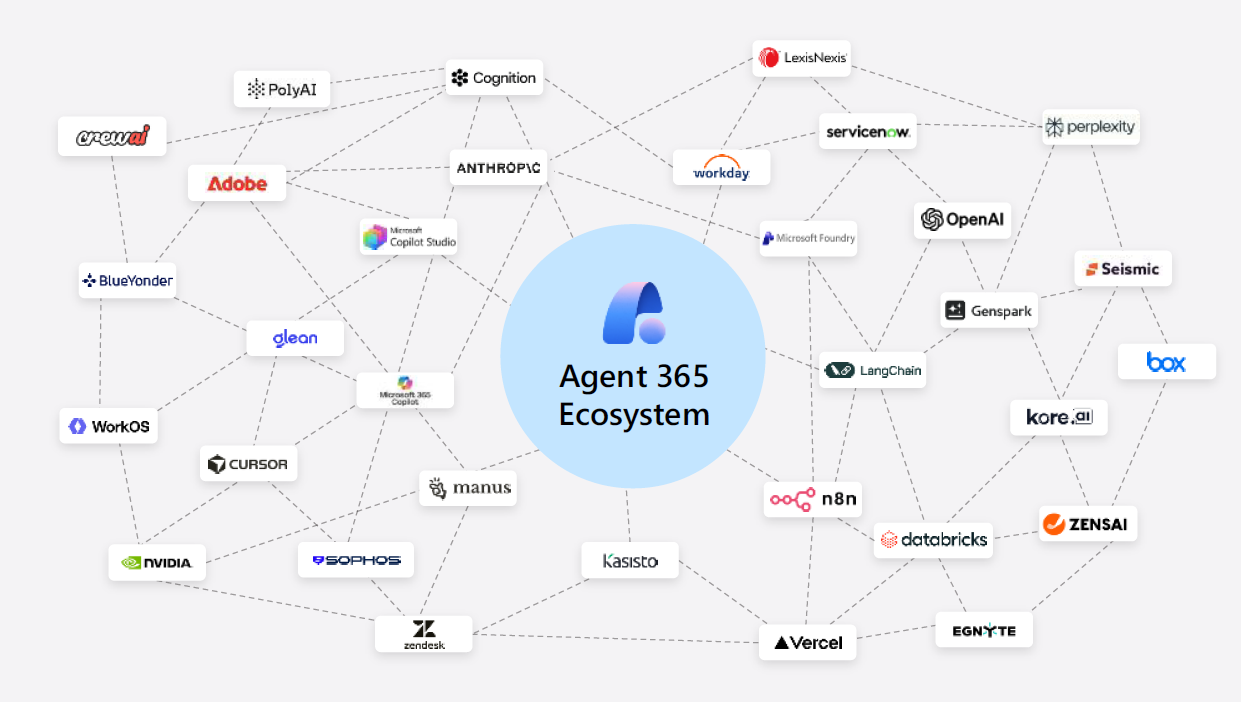
Microsoft designed Agent 365 to support large enterprises that handle sensitive data, strict compliance rules, and complex workflows. The platform builds on Entra for identity, Microsoft Graph for data access, Azure AI for reasoning, and Purview for protection. Each action links to a verified identity. Each request follows policies. Every step appears in the audit log. This structure helps your team use AI with confidence. You keep control while still gaining automation benefits. For additional context, the official announcement explains Microsoft’s goals for the system: https://www.microsoft.com/en-us/microsoft-365/blog/2025/11/18/microsoft-agent-365-the-control-plane-for-ai-agents/.
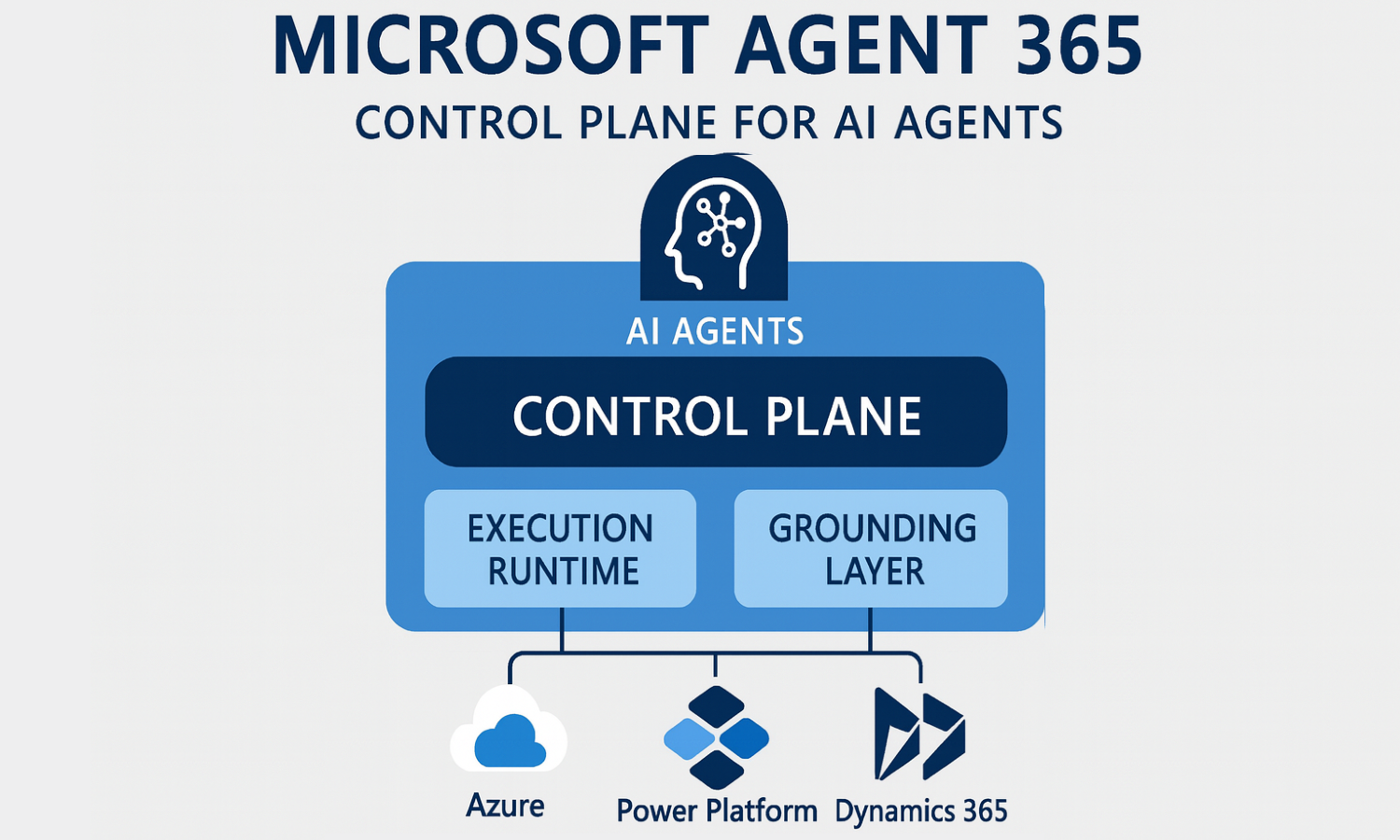
The platform uses a layered architecture that supports control, execution, integration, and grounding. The control layer manages configuration, access scopes, identity, and lifecycle rules. Each agent receives its own Entra identity. This identity defines which systems the agent can use. All calls pass through Conditional Access, Purview policies, and Defender monitoring. The control layer stores run logs, traces, and policy checks. You can review every action, which improves operational confidence.
Next, the execution runtime performs reasoning, connector calls, and workflow sequences. The model creates a plan. Then the runtime checks the plan against policy. When the steps match, the agent executes. When the steps violate a rule, the system blocks the run. Each event includes a record, which helps you detect errors and improve accuracy. You also get clear visibility into input data, connector usage, and grounded responses.

The integration layer connects agents to systems. Microsoft Graph gives structured access to files, mail, calendars, tasks, chats, and security objects. Power Platform connectors extend access to thousands of external services. Dynamics 365 provides CRM and ERP functions. Azure Resource Manager supports interactions with cloud resources. Custom connectors link to non-Microsoft systems. In addition, each connector call uses the agent identity. This prevents unauthorised access and keeps behaviour aligned with your policy.
Grounding uses Microsoft Fabric, SharePoint, Azure AI Search, and structured datasets. You choose which datasets the agent can use. You define retrieval rules and content limits. This improves accuracy because the agent relies on validated knowledge. With these layers combined, the architecture remains predictable, secure, and transparent. For further documentation, Microsoft provides an overview at https://learn.microsoft.com/en-us/microsoft-agent-365/overview.
Agent 365 changes how organisations manage automation. Teams begin to treat agents as operational services, not temporary tools. This shift improves accountability because you assign owners, approval flows, and audit checks. You also improve process consistency. Teams move from manual activity to oversight, analysis, and refinement. As a result, your organisation gains scalability with fewer operational risks.
Industries gain practical benefits. Healthcare organisations process claims, coordinate patient interactions, and manage documentation. Agent 365 improves accuracy through identity controls and audit trails. Government agencies rely on predictable workflows for benefits, licensing, and public communication. The platform supports this need by offering full visibility across agent behaviour. Financial services handle KYC checks, AML reviews, fraud signals, and compliance reporting. These tasks require strict access controls, which Agent 365 enforces. Manufacturing and logistics use agents for supply chain alerts, production coordination, and scheduling. Retail teams use agents for product updates, service routing, and order workflows. In every sector, the platform supports scale, traceability, and secure automation.
For reference, you can review our earlier Ignite analysis for additional Microsoft cloud context:
https://cld2day.com/2025/11/22/microsoft-ignite-2025-the-dawn-of-the-agent-era/.
Adoption begins with a review of your current automation footprint. You identify scripts, flows, and bots that require migration. You define governance roles and access rules. Pilots start in low-risk areas such as internal notifications or document structuring. These early steps help your team understand policy behaviour and alert patterns.
Next, your organisation expands to cross-department workflows. Finance, HR, supply chain, and operations see early gains. You add connectors, integrate external systems, and ground agents in approved datasets. Teams then review logs, error patterns, and access results. This feedback improves design quality and policy alignment.
Over time, organisations extend Agent 365 across core business processes. Claims processing, onboarding, procurement, scheduling, and regulatory workflows benefit from consistent rules. You remove legacy tools and build a streamlined automation estate. Logs, metrics, and traces guide improvements. The platform provides a long-term structure where agents run reliably and safely. For broader documentation on integration endpoints, Microsoft Graph guidelines are available at https://learn.microsoft.com/en-us/graph/overview.
Microsoft Agent 365 delivers a controlled and transparent environment for enterprise AI agents. The platform integrates identity, policy enforcement, grounding, execution, and compliance. You gain predictable behaviour and full visibility into your automation environment. With careful planning, training, and governance, your organisation achieves scalable and secure automation across all departments.